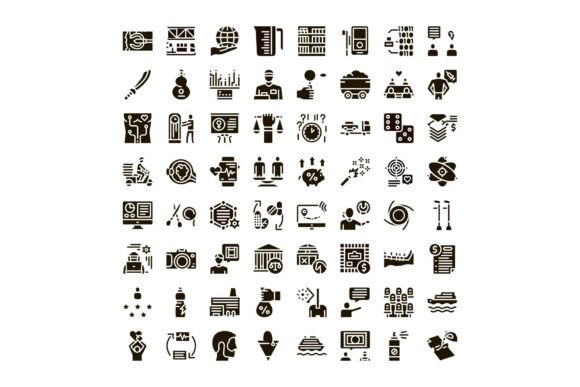
Business, Finance, Energy, Medicine, and Integrated Systems Thinking
Business, Finance, Energy, Medicine, and—when considered together—represent a convergence of foundational societal systems. This grouping is not a single discipline but an interdisciplinary lens for understanding how economic activity, resource management, human health, and organizational decision-making intersect. It reflects the reality that modern challenges—from sustainable healthcare delivery to energy-efficient infrastructure financing—cannot be solved in isolation. Professionals, policymakers, educators, and designers increasingly rely on this integrated perspective to build resilient strategies, communicate complex relationships, and support informed decision-making.
Interest in Business, Finance, Energy, Medicine, and typically arises when individuals confront multifaceted problems requiring cross-domain insight. A hospital administrator evaluating solar-powered backup systems must weigh capital expenditure (Finance), regulatory compliance (Medicine), grid reliability (Energy), procurement logistics (Business), and patient safety protocols (Medicine). Similarly, a sustainability consultant designing a community health initiative may need to model long-term funding streams (Finance), operational workflows (Business), emissions reduction targets (Energy), clinical outcomes tracking (Medicine), and public engagement tactics (Education, Leisure, Personal Care). The value lies not in mastering all five domains, but in recognizing their interdependencies and knowing where to seek expertise or visual tools to clarify them.
One practical benefit of this integrative approach is improved communication across stakeholder groups. Hand-drawn line art icons depicting work, medicine, finance, education, leisure, and personal care serve as neutral, accessible visual anchors in infographics, dashboards, and presentations. Unlike photorealistic or highly stylized graphics, hand-drawn icons convey approachability and conceptual clarity—ideal for explaining tradeoffs without oversimplifying. For example, pairing a finance icon with an energy icon signals cost-benefit analysis of renewable upgrades; overlaying medicine and personal care icons helps distinguish clinical services from preventive wellness activities. These icons support transparency by making abstract relationships tangible—especially useful when presenting to non-specialist audiences or multidisciplinary teams.
However, integration carries tradeoffs. Depth in any one domain often requires focused study and experience; attempting broad coverage without grounding can lead to superficial analysis or misaligned assumptions. A finance professional unfamiliar with clinical workflow constraints might underestimate implementation timelines for electronic health record upgrades. Likewise, an energy engineer unfamiliar with reimbursement models may overlook how Medicare billing rules affect adoption of telehealth-enabled remote monitoring devices. Expectations should reflect realism: Business, Finance, Energy, Medicine, and is most effective as a framing tool—not a replacement for domain-specific knowledge.
This framework is a strong fit when the goal is system-level evaluation rather than technical execution. It supports strategic planning for organizations managing portfolios of initiatives—such as universities launching climate-resilient campus health centers, or municipalities developing equitable clean-energy access programs tied to community health metrics. It also suits educational contexts where learners need scaffolding to connect theory across subjects, or design projects requiring visual storytelling about real-world complexity. In these cases, the emphasis shifts from “who does what” to “how do these pieces influence each other,” enabling more robust risk assessment and opportunity identification.
Alternatives may be preferable when the priority is deep technical proficiency or narrow regulatory compliance. For instance, a pharmaceutical company validating a new drug delivery device would rely first on FDA guidance, ISO standards, and clinical trial methodology—not a general Business, Finance, Energy, Medicine, and overview. Similarly, a utility company optimizing grid load forecasting uses specialized energy modeling software and meteorological data, not cross-sector conceptual diagrams. In such situations, domain-specific frameworks—like Generally Accepted Accounting Principles (Finance), IEC 62304 (Medical Device Software), or IEEE 1547 (Distributed Energy Resources)—provide precise, actionable structure that broader integrative models do not replace.
Practical decision-making begins with clarifying intent. Ask: Is the objective to map relationships, align stakeholders, communicate tradeoffs, or guide high-level investment? If yes, Business, Finance, Energy, Medicine, and offers a useful scaffold. If the objective is to implement a specific process, meet a certification requirement, or solve a narrowly defined engineering problem, then domain-specific resources are more appropriate. Consider also the audience: Technical teams benefit from precision; leadership and community partners often need clarity and context—where hand-drawn icons and plain-language explanations add measurable value.
Another consideration is scalability. Integrative thinking works well at strategic or programmatic levels but can become unwieldy in day-to-day operations. A clinic adopting energy-efficient lighting may use Business, Finance, Energy, Medicine, and to justify the investment (reduced utility costs supporting expanded patient hours), but the actual retrofit requires electricians, procurement officers, and facility managers applying specialized knowledge. Recognizing where integration adds value—and where it gives way to execution—is essential for realistic planning.
Finally, assess available resources. Developing custom visual assets like hand-drawn line art icons demands time and design skill. Off-the-shelf icon sets covering work, medicine, finance, education, leisure, and personal care offer immediate utility for reports, slide decks, or web interfaces—particularly when consistency and accessibility matter. When selecting such assets, prioritize clarity over decoration: lines should be distinct at small sizes, concepts immediately recognizable, and stylistic variation minimal enough to avoid distracting from content. Icons used thoughtfully reinforce logic; used indiscriminately, they obscure it.
In summary, Business, Finance, Energy, Medicine, and is best understood as a decision-support orientation—not a fixed curriculum or toolkit. Its strength lies in surfacing connections that might otherwise remain invisible, helping users ask better questions before committing time, budget, or effort. Whether evaluating a regional health equity initiative, designing a sustainability dashboard, or teaching systems literacy, this perspective encourages attention to consequences beyond immediate scope. It does not guarantee solutions, but it improves the quality of the questions asked—and that is often the most consequential step in responsible, evidence-informed work.