Collection of Business and Lifestyle Pic: A Practical Evaluation for Designers and Content Creators
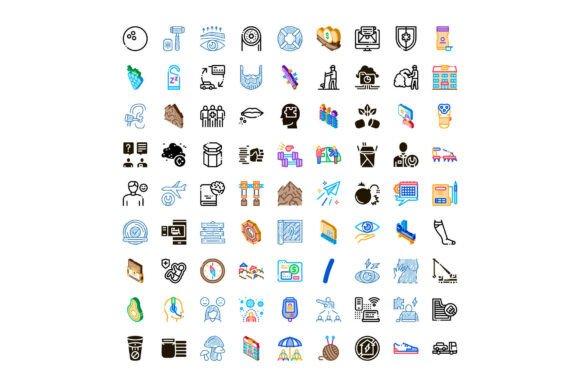
A Collection of Business and Lifestyle Pic refers to a curated, high-quality set of royalty-free photographs and icons designed specifically for professional digital use. It spans multiple thematic domains—including business operations, personal finance, physical and mental health, global travel, emerging technology, and everyday lifestyle activities. Unlike generic stock libraries, this collection emphasizes visual consistency, cultural diversity, realistic representation, and functional adaptability across UI interfaces, data visualizations, marketing collateral, and educational infographics.
Why Consider This Collection?
Designers, product managers, content strategists, and educators often face recurring challenges: sourcing cohesive, inclusive, and contextually accurate visuals without violating licensing terms or compromising brand integrity. A Collection of Business and Lifestyle Pic addresses several common pain points:
- Time efficiency: Reduces hours spent searching, filtering, and editing disparate assets from multiple sources.
- Visual harmony: Offers unified color palettes, lighting styles, and composition approaches—critical for maintaining design continuity across dashboards or multi-page reports.
- Inclusive representation: Features people of varied ages, ethnicities, abilities, and gender expressions across workplace, healthcare, travel, and domestic settings—supporting accessibility and audience resonance.
- Functional flexibility: Includes both standalone images and scalable vector icons, enabling reuse in responsive web layouts, mobile apps, print-ready PDFs, and animated presentations.
Key Benefits—and Realistic Tradeoffs
The primary benefit lies in its cross-domain scope. Users working on fintech dashboards can draw from finance-themed icons while pulling lifestyle imagery for user onboarding flows—all from one source. Similarly, public health communicators building vaccination campaign materials may combine medical concept icons with diverse community photos, avoiding mismatched aesthetics or inconsistent tone.
However, breadth introduces tradeoffs. Because the collection covers six major categories, depth within any single domain is intentionally moderate—not exhaustive. For example, it includes foundational finance icons (charts, wallets, currency symbols) but not niche derivatives like blockchain node diagrams or algorithmic trading flowcharts. Likewise, travel imagery emphasizes broad scenarios (airports, hotels, hiking) rather than hyper-specific locations or seasonal events.
Licensing is another practical consideration. Most versions operate under a standard royalty-free license suitable for commercial projects—including SaaS platforms and client deliverables—but do not extend to resale as standalone digital products (e.g., bundling icons into a new icon font for redistribution). Users requiring extended rights—such as embedding assets into white-labeled software—should verify license terms before purchase.
When This Collection Fits Well
A Collection of Business and Lifestyle Pic is especially well-suited for teams and individuals who prioritize consistency and speed over hyper-specialized detail. It works effectively in these scenarios:
- Early-stage product development: When building MVP interfaces or internal prototypes, having a ready-to-use visual vocabulary accelerates wireframing and usability testing.
- Content-heavy digital reports: Annual sustainability reports, HR diversity metrics, or public sector service guides benefit from coordinated imagery that reinforces narrative clarity without distracting stylistic variation.
- Educational and nonprofit communications: Organizations creating multilingual health literacy tools or financial capability curricula gain value from culturally neutral yet relatable scenes—free from dated stereotypes or overly stylized illustrations.
- Agencies managing multiple clients: Maintaining distinct brand identities becomes easier when visual assets are modular, editable, and legally unambiguous across accounts.
When Alternatives May Be More Appropriate
This collection is less ideal where precision, exclusivity, or domain specificity outweighs convenience. Consider alternatives in these cases:
- Highly regulated industries: Financial institutions or medical device manufacturers may require custom photography with model releases covering specific procedures, equipment, or compliance-related actions—beyond what a general collection provides.
- Brand-critical campaigns: If visual identity hinges on distinctive illustration style or proprietary metaphors (e.g., abstract data storytelling), off-the-shelf assets—even well-designed ones—may dilute differentiation.
- Long-term asset libraries: Teams building internal design systems may prefer modular icon sets built in Figma or Sketch with consistent stroke weights, grid alignment, and semantic naming—rather than static PNG/SVG files requiring manual adaptation.
- Photorealism or cinematic quality: While the collection prioritizes authenticity, it avoids dramatic lighting or editorial-grade staging. Projects demanding evocative mood or narrative tension may benefit more from curated premium photo subscriptions.
Making an Informed Decision
Evaluating whether a Collection of Business and Lifestyle Pic aligns with your needs starts with clarifying your project’s scope and constraints. Ask yourself:
- What percentage of your visual needs fall across business, finance, health, travel, tech, and lifestyle themes? If most assets required sit within this range—and few demand deep specialization—the collection offers strong coverage.
- How much time do you currently spend sourcing, editing, and reconciling visuals? If inconsistency across projects slows revisions or causes stakeholder feedback loops, standardized assets reduce friction.
- Do your audiences reflect diverse demographics—and does your current imagery reflect that accurately? The collection’s emphasis on inclusive representation helps mitigate unconscious bias in visual communication.
- What’s your budget for visual resources relative to other production costs? Licensing a comprehensive set often proves more cost-effective than purchasing individual high-end photos or commissioning custom work for every use case.
Also consider technical fit. Check file formats offered (e.g., SVG for icons, high-res JPEG/PNG for photos), compatibility with your design tools (Figma, Adobe XD, Sketch), and whether metadata or keyword tagging supports efficient discovery within large teams.
Final Thoughts
A Collection of Business and Lifestyle Pic is not a universal solution—but it is a pragmatic one for many real-world design and communication tasks. Its strength lies in balance: sufficient breadth to support multidisciplinary projects, thoughtful curation to ensure relevance and inclusivity, and licensing clarity to reduce legal uncertainty. It excels when consistency, efficiency, and representational accuracy matter more than bespoke art direction or ultra-niche subject matter.
Before committing, review preview samples for visual tone, assess license terms against your deployment context, and compare against existing assets you already own or subscribe to. If your workflow involves frequent iteration across business-facing and human-centered topics—and if visual coherence directly supports your goals—this collection is worth serious evaluation.