Global Issues and Social Problems Icons: Visual Clarity for a Complex World
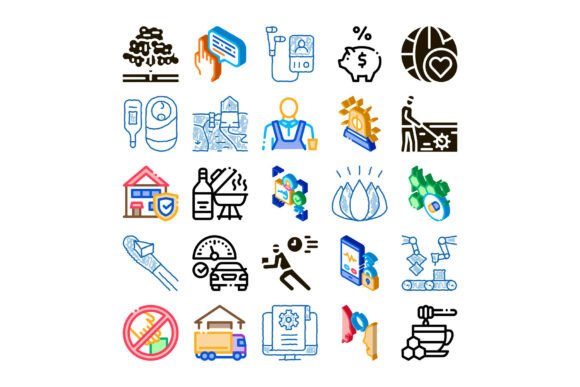
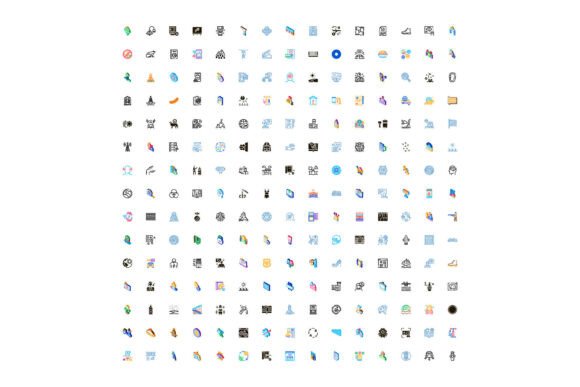
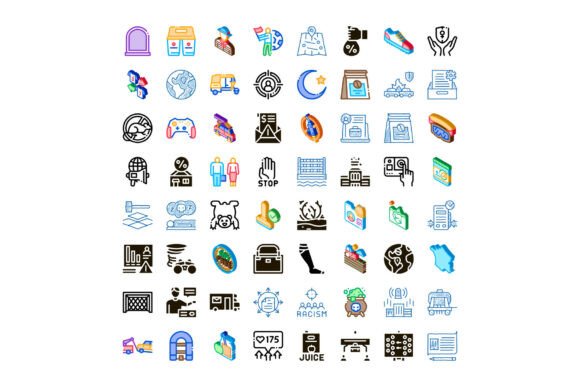
Icons are no longer just decorative flourishes—they’re functional tools that shape how people understand, navigate, and act on complex ideas. Global Issues and Social Problems Icons is a purpose-built icon set designed to translate urgent, multidimensional topics—like climate justice, digital equity, inclusive education, or labor rights—into clear, scalable, and culturally aware visual language. Unlike generic symbol libraries, this collection prioritizes semantic accuracy and contextual nuance: a “refugee support” icon avoids clichéd imagery in favor of subtle, human-centered composition; an “accessibility” symbol reflects diverse mobility and sensory needs without reductionism. It’s vector-based, fully editable, and optimized for responsive interfaces—from nonprofit dashboards tracking SDG progress to classroom infographics explaining civic participation.
Why Visual Literacy Matters More Than Ever
Today’s audiences absorb information faster but retain less—especially when content feels abstract or emotionally distant. A 2023 Pew Research study found that 68% of adults recall data-driven stories more vividly when paired with consistent, meaningful visuals. That’s where Global Issues and Social Problems Icons meets real need: it bridges the gap between systemic challenges and individual comprehension. Consider a local NGO launching a campaign on water scarcity. Instead of relying solely on dense statistics or stock photos of dry riverbeds, they can use a flat-style icon showing a hand holding a reusable bottle beside a stylized aquifer—immediately signaling sustainability, agency, and ecological balance. The icon doesn’t replace narrative—it anchors it.
This shift isn’t about aesthetics alone. It reflects deeper changes in how professionals work: designers collaborate remotely across time zones, educators adapt materials for neurodiverse learners, and product teams build apps for global users with varying literacy levels and cultural references. Icons that communicate clearly across those contexts aren’t optional—they’re foundational to inclusive design practice.
From Generic Symbols to Context-Aware Visual Systems
Icon design has evolved significantly over the past decade. Early flat icons often sacrificed meaning for minimalism—oversimplified symbols that blurred distinctions between related concepts (e.g., “privacy,” “security,” and “data governance” rendered nearly identically). Today’s best practices demand intentionality: isometric depth adds spatial logic for layered issues like supply chain ethics; consistent stroke weight and negative space improve legibility at small sizes; and thoughtful color palettes support accessibility without implying hierarchy (e.g., using neutral tones for human rights icons rather than red—which may unintentionally signal danger or urgency).
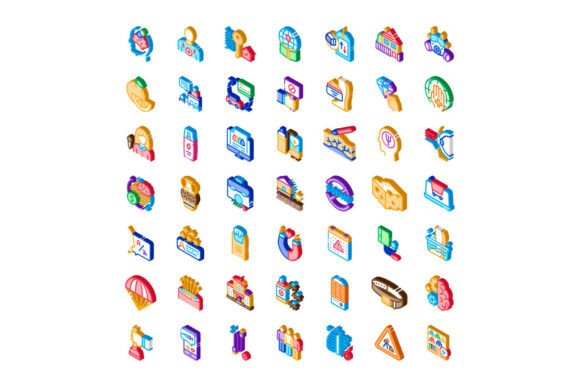
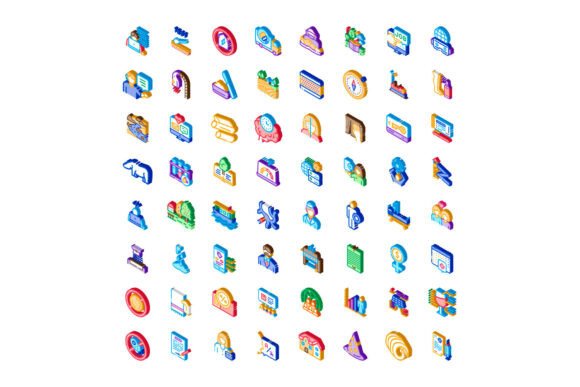
The Global Issues and Social Problems Icons set applies these principles deliberately. Its isometric variants help visualize interdependence—think of a renewable energy icon composed of layered solar panels, wind turbines, and grid connections, all aligned to the same vanishing point. Its flat counterparts prioritize speed and scalability, ideal for mobile app navigation or social media carousels. Both versions share the same underlying visual grammar: rounded corners for approachability, open shapes to suggest transparency, and balanced proportions to avoid visual dominance. This consistency builds trust—not just in the interface, but in the values the icons represent.
Practical Use Across Real-World Workflows
For creators and professionals, this icon set integrates seamlessly into modern workflows—without requiring design expertise. Here’s how it fits practical realities:
- Marketers and communicators use the environment-themed icons to visualize ESG reporting summaries—pairing a carbon footprint icon with real-time emission metrics in client dashboards. No custom illustration needed; just drag, resize, and annotate.
- Educators embed human rights icons into interactive timelines of civil liberties milestones, helping students connect historical events to present-day advocacy. The icons serve as memory anchors—not decorative extras.
- App developers apply the technology and business icons to clarify permissions and data usage. A flat “algorithmic bias” icon next to a settings toggle makes abstract policy tangible—reducing user confusion and support requests.
- Nonprofit teams combine sport and daily life icons to illustrate community health initiatives—say, a stylized running shoe beside a neighborhood garden—to signal grassroots action, not top-down intervention.
Crucially, the set avoids visual overload. Each icon stands alone but also works in coordinated sets—enabling users to build visual narratives rather than isolated graphics. That modularity supports agile content creation: a freelancer updating a client’s sustainability report can swap out outdated icons in minutes, maintaining brand alignment while reflecting current priorities.
Meeting Changing Expectations—Without Overpromising
Users today expect clarity, not commentary. They don’t need icons that “solve” inequality or “fix” climate change—they need tools that help them explain, organize, and respond with greater precision. That realism grounds the value of Global Issues and Social Problems Icons. It doesn’t claim to drive policy change—but it does reduce friction when translating policy into public understanding.
This aligns with broader shifts in digital trust. People increasingly question sources, question framing, and notice visual bias. An icon that depicts only one gender, one ability profile, or one geographic context risks alienating more than it engages. The set addresses this by offering inclusive variations—not as afterthoughts, but as core options. For example, the “education” icon appears in multiple forms: one with a stylized laptop (for digital learning), another with hands exchanging a book (for peer-to-peer knowledge sharing), and a third showing a multigenerational group in a circle (for community-led curriculum development). Choice here isn’t about quantity—it’s about relevance.
Designing for Longevity, Not Just Trends
While some icon libraries chase novelty—adding 3D effects or animated variants—the most enduring tools prioritize adaptability. Vector format ensures crisp rendering on any screen, from smartwatch displays to large-format conference backdrops. Consistent spacing, sizing, and alignment mean icons scale predictably within Figma, Adobe XD, or even HTML/CSS layouts. And because they’re built with semantic naming conventions (e.g., icon-human-rights-access-to-justice), developers can integrate them into accessible code without guesswork—supporting screen readers and keyboard navigation out of the box.
This longevity matters because global issues don’t follow quarterly design cycles. A refugee resettlement initiative launched in 2024 will still need clear, respectful visuals in 2027—and its team shouldn’t have to redesign core assets every year. The Global Issues and Social Problems Icons set anticipates that need: its visual language is restrained enough to remain relevant, yet specific enough to avoid ambiguity.
A Tool for Shared Understanding—Not Just Decoration
In a world saturated with information—and often polarized around solutions—visual tools that foster shared reference points are quietly essential. When a teacher, a policymaker, and a community organizer all recognize the same icon for “digital inclusion,” they start from common ground. That doesn’t erase disagreement—but it reduces the cognitive load of establishing basic definitions.
That’s the quiet power of this icon set: it doesn’t shout. It clarifies. It doesn’t simplify complexity—it structures it. Whether you’re prototyping an ethical AI disclosure page, designing a voter education toolkit, or illustrating a children’s book about fair trade, these icons offer grounded, respectful, and technically robust starting points. They reflect a simple truth: how we visualize problems shapes how seriously—and creatively—we engage with them.