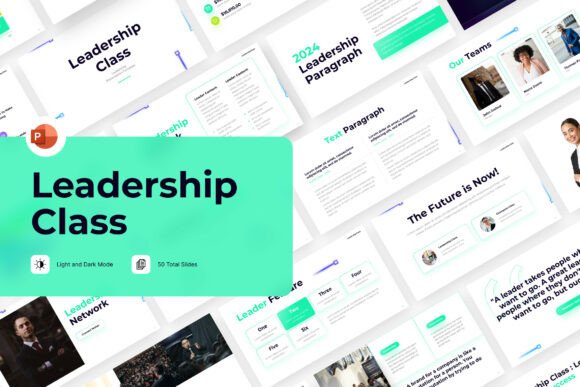
Transforming Leadership Education Through Purpose-Built Visual Design
Effective leadership isn’t taught through bullet points—it’s cultivated through clarity, resonance, and intentionality. When educators, corporate trainers, and organizational development professionals select a Leadership Class PowerPoint Template, they’re not merely choosing slide layouts; they’re choosing a pedagogical interface. A well-structured template shapes how concepts land, how learners engage, and how ideas translate from classroom to boardroom. In today’s saturated digital landscape—where attention is fragmented and expectations for visual coherence are higher than ever—the difference between forgettable instruction and enduring impact often lies in the underlying design architecture.
Why Generic Templates Fall Short in Leadership Development
Most off-the-shelf presentation assets prioritize aesthetics over instructional logic. They offer sleek transitions, gradient overlays, and decorative icons—but rarely align with the cognitive rhythms of leadership learning. Consider this: leadership education involves layered constructs—self-awareness, emotional intelligence, adaptive decision-making, ethical reasoning, and systems thinking. These aren’t linear topics. They demand visual metaphors that reflect interdependence, progression, tension, and reflection.
A generic business template might reduce “conflict resolution” to a single icon-laden slide. But a purpose-built Leadership Class PowerPoint Template supports scaffolding: one slide introducing the dual-axis model of assertiveness vs. cooperativeness; another layering real-world case annotations; a third inviting cohort-based annotation via embedded prompts. This isn’t decoration—it’s didactic design.
The Infographic Pack as an Instructional Framework
The Infographic Pack referenced in the source material transcends typical template utility by embedding narrative structure into its 50 unique slides. Each layout corresponds to a phase in leadership growth—not just “start,” “middle,” and “end,” but psychologically grounded stages such as:
- Embarking—onboarding new leaders with identity-mapping visuals (e.g., values compasses, influence network diagrams)
- Building Recognition—comparing leadership archetypes across industries using comparative radar charts or contextualized persona grids
- Refining Proposition—articulating evolved leadership value through before/after capability matrices or stakeholder alignment heatmaps
These aren’t abstract illustrations. They’re built from 90 XML files—meaning each element retains editable logic, not just appearance. A timeline isn’t static; it’s parametric. Adjust one date or milestone, and dependencies update intelligently. This responsiveness mirrors how leadership development unfolds: iterative, contextual, and responsive to feedback loops.
Design Integrity Meets Practical Flexibility
One of the most underappreciated strengths of this resource is its commitment to authentic color semantics. Unlike templates that default to arbitrary brand palettes, the Leadership Class PowerPoint Template uses Microsoft Office’s native theme engine to assign meaning to hue and contrast. For instance:
- Deep indigo signals foundational principles (vision, ethics, purpose)
- Warm amber denotes reflective practice (journaling prompts, peer feedback zones)
- Crisp teal anchors action-oriented modules (coaching frameworks, delegation workflows)
This consistency does more than unify visuals—it reinforces conceptual anchoring. Learners begin associating specific chromatic cues with types of cognitive work. Over time, that association becomes intuitive, reducing cognitive load and increasing retention.
Equally vital is the light/dark background option—not as a stylistic toggle, but as an accessibility and context-aware feature. Dark mode isn’t just for late-night prep; it reduces glare during extended facilitation sessions and improves readability in high-ambient-light environments like open-concept training rooms or hybrid webinar setups.
Real-World Implementation Across Diverse Contexts
How does this translate beyond theory? Let’s examine three distinct applications:
Educators Building Cohort-Based Leadership Curricula
A university professor designing a capstone course on inclusive leadership used the “Stakeholder Alignment Spectrum” slide to map student-led community projects against institutional equity goals. Rather than presenting criteria as text, students collaboratively placed initiatives along axes measuring *impact depth* and *community agency*. The visual became both assessment tool and discussion catalyst—prompting richer dialogue about power distribution than any rubric alone could achieve.
Corporate L&D Teams Scaling Manager Development
A global tech firm integrated the “Decision-Making Context Matrix” into its mid-level management program. Instead of teaching frameworks in isolation, facilitators asked managers to plot recent decisions—hiring choices, product pivots, team restructuring—onto quadrants defined by urgency and ambiguity. Patterns emerged instantly: clusters in the “Crisis Response” quadrant revealed gaps in delegation confidence; sparse representation in “Strategic Experimentation” signaled risk aversion. The slide didn’t just convey theory—it surfaced lived experience as data.
Nonprofit Leaders Communicating Impact Narratives
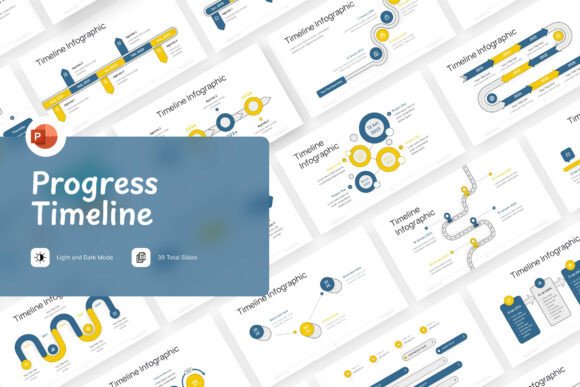
A regional advocacy organization repurposed the “Leadership Evolution Timeline” to visualize its five-year capacity-building journey—not as milestones, but as shifts in internal capability (e.g., “from reactive grant reporting → proactive policy influence”). Donors and board members grasped strategic maturity faster through spatial progression than through annual reports dense with KPIs.
Customization Without Compromise
“Fully customizable” is often marketing shorthand for “editable but fragile.” Here, customization is engineered into the file architecture. Because all elements are built using native PowerPoint drawing tools—not flattened PNGs or ungroupable vector imports—users can:
- Swap icons without breaking alignment grids
- Adjust typography hierarchy while preserving responsive spacing rules
- Recolor entire slide families using Office Theme Colors—ensuring consistency across decks without manual hex-code hunting
- Export individual components as SVG for use in LMS platforms or interactive dashboards
This level of fidelity matters when leadership content must scale across departments, languages, or regulatory contexts. A compliance officer adapting the “Ethical Decision Flowchart” for APAC markets doesn’t rebuild from scratch—they localize text, adjust cultural references in annotations, and retain the same logical scaffolding that ensured legal rigor in the EMEA version.
What to Consider Before Adoption
No tool replaces pedagogical judgment—but some tools amplify it. Before integrating this Leadership Class PowerPoint Template, consider these practical factors:
- Version Compatibility: The XML-based structure requires PowerPoint 2019 or later (or Microsoft 365). Legacy users may encounter rendering inconsistencies, particularly with dynamic shape behaviors.
- Image Licensing: As noted, stock imagery isn’t included. This is intentional—it preserves brand authenticity and avoids unintended copyright exposure. Users should source images aligned with their organization’s visual guidelines or use AI-generation tools with commercial licenses.
- Workflow Integration: While the Help Guide File provides clear setup instructions, teams using collaborative platforms like SharePoint or Google Slides will need lightweight conversion protocols. The light/dark versions simplify dark-mode exports for PDF handouts or LMS uploads.
- Facilitator Readiness: The depth of these slides rewards skilled facilitation. A novice presenter may default to reading text-heavy variants; experienced designers recommend starting with blank canvas slides first, then layering in infographic elements only where they add explanatory value.
Design as Pedagogy, Not Polish
At its core, this resource reflects a quiet but consequential shift in how we conceive of leadership education: away from transmission, toward co-construction. The 50 slides aren’t containers for information—they’re invitations to interaction. The XML architecture isn’t technical overhead—it’s infrastructure for adaptability. The light/dark options aren’t aesthetic preferences—they’re acknowledgments of human variability in learning conditions.
When RRGraph Design states they’ve supported 1000 global companies, what’s implied is not volume—but variation. Each implementation reveals something new about how leadership manifests: in a hospital’s crisis-response debriefs, a school district’s equity task force, a startup’s founder-to-CEO transition. The Leadership Class PowerPoint Template succeeds not because it prescribes answers, but because it provides a grammar for asking better questions—and framing them in ways that resonate, endure, and evolve.
Ultimately, leadership isn’t performed on stage. It’s practiced in moments of uncertainty, modeled in everyday interactions, and reinforced through consistent, thoughtful communication. A template that honors that complexity doesn’t just look professional—it functions as a quiet partner in the work that matters most.